

Introduction
Growing your muscles and improving strength at home doesn’t require fancy workout equipment. In fact, you can achieve your desired results with just your body weight and the right fitness tips. A hybrid approach—combining bodyweight, resistance bands, and dumbbells—ensures a balance between functional strength, muscle isolation, and progression, suitable for all fitness levels.
Muscle strength is not just for athletes or gym enthusiasts—it’s essential for everyone. From carrying groceries to maintaining posture and preventing injuries, strong muscles are the foundation of a healthy body. Yet, many people think improving muscle strength requires long hours at the gym or expensive equipment.
The truth? You can build noticeable strength with simple, science-backed methods that fit into daily life. In this article, we’ll explore seven easy ways to improve muscle strength safely, effectively, and sustainably. Keep in mind that strength training at home is as effective as you are committed. Engaging in regular, progressive, and well-rounded exercise routines will lead to noticeable results, regardless of what workout method you choose.

Understanding Muscle Strength
Muscle strength refers to the ability of a muscle or group of muscles to exert force against resistance. Muscular strength is tied together with muscular power and endurance.
- Muscular Power: How much force you can generate to move weight in the shortest time possible.
- Muscular Endurance: How much force your muscles can produce and sustain over a certain duration of time.
They are all equally important and both play into overall muscular strength.
For example, if you were to do one minute of push-ups, you would need muscular strength to lift yourself up, muscular endurance to sustain this for the allotted time, and muscular power if you want to do as many reps as possible.
It’s different from muscle size (hypertrophy), though the two often go hand in hand.
Bodily Factors of Strength:
Strength relies on your muscles having adequate support, which means your joints, bones, ligaments and tendons need to be up to par. Another important point is your neural connection, as your motor neurons must coordinate with each other to fire off muscle fiber contraction at the same time during movements and lifts.
More to the point of the muscles specifically, the size of your muscles and their ratio of slow and fast twitch fibers determines strength and endurance. Your muscles work as one component but you need to train strength in a variety of ways to have well-rounded ability in your muscular strength.
Strength training triggers neuromuscular adaptations, improving how efficiently your brain communicates with muscles, enabling you to lift heavier or perform better with the same muscle mass.
4 DIFFERENT TYPES OF STRENGTHS
Muscular strength can be broken down into four main categories. This will help you understand how power and endurance relate to strength and the purpose of adding variety to your training program. If you want to be strong in every sense of the word, you need to train for all of the below.
1. Absolute Strength:
Absolute strength is another term for maximal strength. It relates to a 1 rep max. It’s the absolute maximum weight you can lift in one shot.
Exercises that are good for training absolute strength are squats, deadlifts, and presses. These compound exercises require your motor neurons to fire together, incorporating large groups of muscles to complete the lift.
2. Explosive Strength:
Explosive strength refers to the speed of your strength. How quickly you can move the weight. The better your capability to exert a lot of force in a short period of time, the more explosive strength you have (i.e. power). This is a very important type of strength for athletes.
3. Endurance Strength:
Endurance strength relates to muscular endurance when resistance is in play. It is the ability to repeatedly exert force against a form of resistance. So, any activity that has a relatively long duration of muscle tension will increase muscular endurance. The goal is to not decrease the efficiency of your muscular strength for that duration of time.
4. Relative Strength:
Relative strength is exactly how it sounds, it is relative to your size and weight. It has to do with your body weight-to-force ratio…or in other words, how much weight you can move in comparison to your bodyweight.
Relative strength could also be referred to as efficient strength.
For relative strength, all strength types of matter. There is no specific way to train for relative strength, but if you focus on the other areas of strength, your relative strength will increase. This is especially true with training maximal strength. If you train for maximal strength, your relative strength will typically increase. Endurance and explosive strength are equally as important if you want to increase relative strength. So, to sum it up, relative strength will increase if you train the other three areas of strength.
Why Building Strength Matters
| Benefits of Muscle Strength | Impact on Health |
|---|---|
| Improves daily function | Makes everyday tasks easier |
| Enhances metabolism | Increases calorie burn, even at rest |
| Supports bone health | Prevents osteoporosis |
| Reduces injury risk | Stabilizes joints and posture |
| Boosts confidence | Improves body image and mental well-being |
| Delays aging effects | Maintains independence in older adults |
1. Start with Bodyweight Exercises
If you’re new to strength training, your own body is the best starting point. Bodyweight exercises build foundational strength, balance, and flexibility—all without needing any equipment.
Examples of Effective Bodyweight Movements
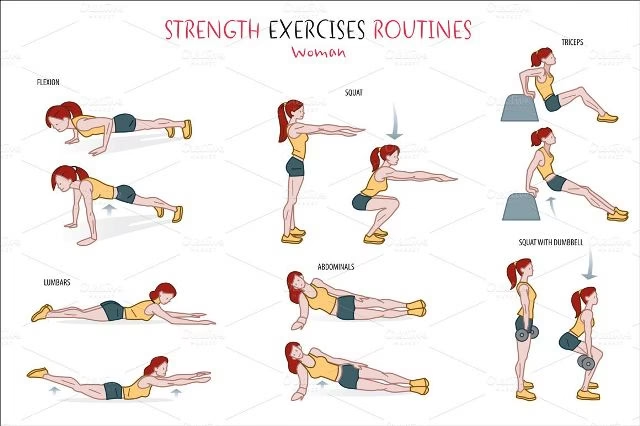
- Push-ups – Strengthen chest, shoulders, and triceps
- Squats – Target quads, hamstrings, glutes
- Planks – Engage the core and back
- Lunges – Improve lower-body strength and stability
- Glute bridges – Strengthen posterior chain muscles
How to begin:
Start with 2–3 sets of 10–15 repetitions for each movement, 3 times a week. Focus on form over quantity—proper technique prevents injury and ensures optimal results.
Progression Tip:
Increase the challenge by changing tempo (slower lowering phase), adding reps, or moving to advanced versions like single-leg squats or decline push-ups.
2. Use Resistance Bands or Light Weights

Once your body adapts to bodyweight exercises, add external resistance to stimulate further muscle growth.
Resistance bands and dumbbells offer versatility without intimidating gym machines. They help activate stabilizer muscles, leading to balanced strength development.
Sample Beginner Workout with Resistance Bands
| Exercise | Target Muscles | Reps/Sets |
|---|---|---|
| Banded Squat | Glutes, Quads | 12 reps × 3 sets |
| Banded Row | Back, Biceps | 10 reps × 3 sets |
| Overhead Press | Shoulders | 12 reps × 3 sets |
| Lateral Band Walk | Glutes, Hips | 15 steps × 3 sets |
| Bicep Curl | Arms | 10 reps × 3 sets |
Tip:
Use moderate tension—you should feel challenged by the last two reps but still maintain form.
3. Follow the Progressive Overload Principle
One of the most crucial yet misunderstood aspects of strength building is progressive overload. It means gradually increasing the stress placed on muscles over time.
Without progressive overload, your muscles adapt and stop growing stronger.
Ways to Apply Progressive Overload
- Increase resistance: Add weight or use thicker resistance bands.
- Increase volume: More sets or reps.
- Increase frequency: Add one extra training day per week.
- Improve technique: Focus on slower, controlled movements.
Example Progression Plan
| Week | Load (Resistance) | Sets × Reps | Notes |
|---|---|---|---|
| 1–2 | 5 lbs / light band | 3 × 12 | Focus on form |
| 3–4 | 8 lbs / medium band | 3 × 10 | Increase resistance |
| 5–6 | 10 lbs / heavy band | 4 × 8 | Shorter reps, more control |
| 7+ | Continue increasing gradually | Adjust | Track progress weekly |
Tracking your progress helps you stay motivated and prevents plateaus.
4. Prioritize Protein and Balanced Nutrition
Muscle strength isn’t built in the gym alone—it’s also built in the kitchen. After strength training, your muscles repair and grow stronger only if they receive the right nutrients, especially protein.
Macronutrient Breakdown for Strength Building
| Nutrient | Function | Recommended Daily Intake |
|---|---|---|
| Protein | Repairs and builds muscle tissue | 1.2–2.0 g per kg of body weight |
| Carbohydrates | Replenish glycogen for energy | 3–6 g per kg of body weight |
| Fats | Support hormones and recovery | 20–30% of total calories |
Protein Sources: Lean meats, fish, eggs, beans, tofu, Greek yogurt.
Carb Sources: Whole grains, fruits, starchy vegetables.
Healthy Fats: Avocados, nuts, olive oil, fatty fish.
Tip:
Distribute protein intake evenly throughout the day (20–30g per meal). A post-workout shake within 30–60 minutes helps recovery.
5. Incorporate Functional Movements
Functional strength focuses on real-life movement patterns—lifting, pushing, pulling, twisting, and bending. These exercises improve not only raw strength but also coordination and injury prevention.
Best Functional Exercises
- Deadlifts: Build posterior chain strength
- Farmer’s Carry: Enhances grip and core stability
- Step-ups: Strengthen legs and balance
- Medicine Ball Slams: Build explosive power
- Kettlebell Swings: Combine cardio and strength
Why it Works:
Functional training engages multiple joints and muscles simultaneously, teaching your body to move as one unit—similar to how it operates in everyday life.
6. Don’t Skip Rest and Recovery
Muscles don’t grow while you’re training—they grow while you’re resting. Overtraining without recovery can lead to fatigue, reduced performance, and even injury.
Key Recovery Practices
- Sleep: Aim for 7–9 hours per night
- Rest days: At least 1–2 per week for full recovery
- Hydration: Water supports nutrient transport and recovery
- Stretching and foam rolling: Reduce soreness and improve mobility
- Active recovery: Light walks or yoga between intense days
Remember: Recovery isn’t laziness—it’s part of the training plan.
7. Stay Consistent and Track Progress
Building muscle strength is a gradual process. The key difference between those who succeed and those who give up? Consistency.
Keep a workout journal or use a fitness app to track:
- Exercises, weights, sets, and reps
- Energy levels and soreness
- Nutrition and hydration habits
Small improvements each week add up to massive changes over time. Celebrate progress—whether that’s one extra push-up or five more pounds lifted.
Motivation Tips
- Set SMART goals (Specific, Measurable, Achievable, Relevant, Time-bound)
- Train with a friend or join a group for accountability
- Mix up routines to prevent boredom
- Reward yourself for milestones achieved
Key Takeaways
| Aspect | Summary |
|---|---|
| Start Simple | Begin with bodyweight exercises before adding resistance |
| Progress Gradually | Apply progressive overload to stimulate constant adaptation |
| Fuel Your Body | Adequate protein and nutrients are essential for muscle repair |
| Train Functionally | Choose exercises that mimic real-life movements |
| Recover Smart | Rest, sleep, and stretching are as important as lifting |
| Track & Stay Consistent | Consistency and monitoring ensure long-term success |
Conclusion
Improving muscle strength doesn’t have to be complicated or intimidating. With just seven easy strategies—bodyweight training, resistance use, progressive overload, balanced nutrition, functional exercises, proper recovery, and consistent tracking—you can transform your physical performance and overall health.
Start small, stay consistent, and remember: every rep brings you one step closer to a stronger, healthier you.
Frequently Asked Questions (FAQs)
1. How long does it take to see results in muscle strength?
Most people begin noticing measurable strength gains in 4–6 weeks of consistent training. Visual muscle growth might take a bit longer.
2. Can I build strength without going to the gym?
Absolutely! Bodyweight and resistance band workouts at home are highly effective if you apply progressive overload.
3. How much protein do I really need per day?
Aim for 1.2–2.0 grams of protein per kilogram of body weight daily, depending on your activity level.
4. Is lifting heavy weights the only way to build strength?
No. You can build strength using lighter weights or resistance bands by performing more repetitions and maintaining proper form.
5. Should I work out every day?
No. Muscles need rest to grow. Training 3–5 days per week with proper recovery is ideal for most people.
6. Can older adults safely improve muscle strength?
Yes! Strength training is beneficial at any age—it helps preserve bone density, balance, and independence in seniors.
7. What if I don’t have time for long workouts?
Even 20–30 minutes of focused, compound exercises 3–4 times a week can significantly improve muscle strength over time.
8. Is soreness necessary to build strength?
Mild soreness is normal, but severe pain is not required for progress. The goal is consistent improvement, not exhaustion.
9. How do you prevent muscle weakness?
The answer to this is simple. You need to do strength training! With muscles, you have a use it or lose it effect. Inactivity will cause a decrease in both muscle size and strength. Without consistent strength and resistance training, you will undoubtedly experience atrophy (loss of muscle mass and strength). So, to prevent muscle weakness, just workout! Train for strength with resistance training!
References
- American College of Sports Medicine (ACSM). Guidelines for Exercise Testing and Prescription. 11th Edition.
- Schoenfeld, B. J. (2010). The mechanisms of muscle hypertrophy and their application to resistance training. Journal of Strength and Conditioning Research, 24(10), 2857–2872.
- Phillips, S. M. (2014). A brief review of critical processes in exercise-induced muscular hypertrophy. Sports Medicine, 44(S2), 71–77.
- American Heart Association. Resistance Training Recommendations. www.heart.org
- National Institutes of Health. Dietary Protein and Muscle Mass in Adults.
- Harvard Health Publishing. How to improve strength safely and effectively.
- Mayo Clinic Staff. Strength training: Get stronger, leaner, and healthier. www.mayoclinic.org
Wow, incredible blog format! How lengthy have you been blogging for? you make running a blog look easy. The whole glance of your website is excellent, as smartly as the content material!
Greate post. Keep posting such kind of information on your site. Im really impressed by your site. Hi there, You have performed a fantastic job. I will definitely digg it and in my view suggest to my friends. I am sure they will be benefited from this web site.
Hi there are using WordPress for your site platform? I’m new to the blog world but I’m trying to get started and create my own. Do you need any coding expertise to make your own blog? Any help would be greatly appreciated!
Just want to say your article is as amazing. The clearness to your publish is simply excellent and that i can assume you’re knowledgeable on this subject. Well with your permission let me to take hold of your feed to keep up to date with forthcoming post. Thank you a million and please continue the gratifying work.
how effectively you communicate your ideas, and this piece genuinely
finish because the clarity, structure, and passion in your writing
You are my breathing in, I possess few blogs and rarely run out from brand :). “‘Tis the most tender part of love, each other to forgive.” by John Sheffield.
Hello there, I discovered your blog by means of Google while searching for a related topic, your web site got here up, it appears to be like great. I have bookmarked it in my google bookmarks.
refreshing depth of insight. I found myself fully engaged from start to
refreshing depth of insight. I found myself fully engaged from start to
refreshing depth of insight. I found myself fully engaged from start to
You’ve articulated this topic better than anyone else.
Your enthusiasm shines through every sentence — amazing work!
create an experience that feels both educational and inspiring. Every
stands out.
how effectively you communicate your ideas, and this piece genuinely
I’m not sure why but this blog is loading incredibly slow for me. Is anyone else having this issue or is it a issue on my end? I’ll check back later and see if the problem still exists.
Comment 139: This blog post is truly outstanding and provides such a
stands out.
Hi this is kinda of off topic but I was wondering if blogs use WYSIWYG editors or if you have to manually code with HTML. I’m starting a blog soon but have no coding knowledge so I wanted to get advice from someone with experience. Any help would be greatly appreciated!
Wonderful, what a blog it is! This blog provides useful information to us, keep it up.
Thank you, I have recently been looking for information about this subject for ages and yours is the best I have located so far.
insight. The clarity, flow, and passion in your writing make the entire
insight. The clarity, flow, and passion in your writing make the entire post amazing.
insight. The clarity, flow, and passion in your writing make the entire post amazing.
When I originally commented I clicked the -Notify me when new feedback are added- checkbox and now every time a comment is added I get four emails with the identical comment. Is there any way you possibly can take away me from that service? Thanks!
I was curious if you ever thought of changing the page layout of your site? Its very well written; I love what youve got to say. But maybe you could a little more in the way of content so people could connect with it better. Youve got an awful lot of text for only having one or 2 images. Maybe you could space it out better?
Just desire to say your article is as amazing. The clearness in your post is simply cool and i can assume you are an expert on this subject. Well with your permission allow me to grab your RSS feed to keep updated with forthcoming post. Thanks a million and please continue the gratifying work.
insight. The clarity, flow, and passion in your writing make the entire
I am often to blogging and i actually appreciate your content. The article has actually peaks my interest. I am going to bookmark your site and keep checking for new information.