

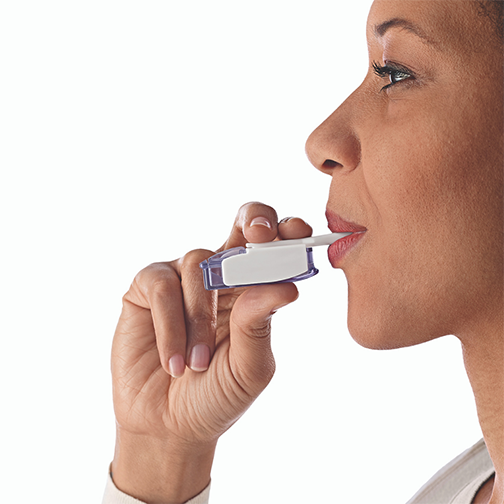
Description
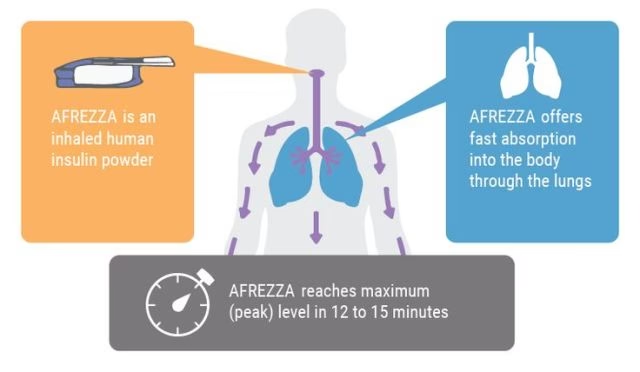
- Insulin human inhaled is a man-made insulin that is breathed in through your lungs and is used to control high blood sugar in patients with diabetes.
- Insulin is one of many hormones that help the body turn the food we eat into energy. This is done by using the glucose (sugar) in the blood as quick energy. Also, insulin helps us store energy that we can use later.
- When you have diabetes mellitus (sugar diabetes), your body cannot make enough insulin or does not use insulin properly. So, you must take additional insulin to regulate your blood sugar and keep your body healthy.
- This is very important as too much sugar in the blood can be harmful to your health.
- Insulin human starts to work faster than some other types of insulin, and its effects do not last as long. It should act more like the insulin your body would normally produce.
- Because the effects of insulin human are short-acting, your doctor may also prescribe a longer-acting insulin for you to use.
What is this medication?
- INSULIN (IN su lin) treats diabetes. It works by increasing insulin levels in your body, which decreases your blood sugar (glucose). It belongs to a group of medications called rapid-acting insulins. Changes to diet and exercise are often combined with this medication.
- This medicine may be used for other purposes; ask your health care provider or pharmacist if you have questions.
-
COMMON BRAND NAME(S): Afrezza
This medicine is available only with your doctor’s prescription.
This product is available in the following dosage forms:
- Aerosol Powder
Afrezza: Pros and Cons
Pros:
- It is a drug-device combination product which is rapid acting inhaled insulin, administered at the beginning of each meal.
- Drug’s safety and effectiveness were evaluated in both Type-I and II diabetes patients (Total 3,017 participants) [11].
- It uses a different inhaled insulin formulation (2.5μm) and technosphere technology, which appears to have a more convenient delivery system and greater dosing flexibility.
What is Technosphere technology?
- It contains recombinant human insulin dissolved with powder (fumaryl diketopiperazine).
- Once inhaled, technosphere insulin is rapidly absorbed upon contact with lung surface [12].
- Inhalable insulin is delivered with a thumb size inhaler with a rather increased dosing flexibility [13].
- Both components, insulin and powder (fumaryl diketopiperazine) are almost completely cleared from the lungs of healthy individuals within 12 hours of inhalation.
- In contrast to Exubera (8-9%) only 0.3% of insulin of inhaled insulin remained in lungs after 12 hours [14].
Cons:
- May develop an increase in serum antibody levels though not related to any significant clinical change.
- Acute bronchospasm in patients with asthma and COPD. May cause hypoglycemia, cough and throat pain/irritation.
- Significant decrease in Diffusing Capacity of Lungs for Carbon Monoxide (DLCO) relative to subcutaneous insulin.
- Smoking appears to enhance insulin absorption [15].
- *FDA approved Afrezza with a caution (Risk Evaluation and Mitigation Strategy) for a communication plan to inform health care professionals about the serious risk of acute bronchospasm associated with Afrezza [15].
Before Using
- In deciding to use a medicine, the risks of taking the medicine must be weighed against the good it will do. This is a decision you and your doctor will make. For this medicine, the following should be considered:
Allergies
- Tell your doctor if you have ever had any unusual or allergic reaction to this medicine or any other medicines.
- Also tell your health care professional if you have any other types of allergies, such as to foods, dyes, preservatives, or animals.
- For non-prescription products, read the label or package ingredients carefully.
Pediatric
- Appropriate studies have not been performed on the relationship of age to the effects of insulin human inhaled in the pediatric population.
- Safety and efficacy have not been established.
Geriatric
- Appropriate studies performed to date have not demonstrated geriatric-specific problems that would limit the usefulness of insulin human inhaled in the elderly.
Breastfeeding
- There are no adequate studies in women for determining infant risk when using this medication during breastfeeding.
- Weigh the potential benefits against the potential risks before taking this medication while breastfeeding.
Drug Interactions
- Although certain medicines should not be used together at all, in other cases two different medicines may be used together even if an interaction might occur.
- In these cases, your doctor may want to change the dose, or other precautions may be necessary. When you are taking this medicine, it is especially important that your healthcare professional know if you are taking any of the medicines listed below.
- The following interactions have been selected on the basis of their potential significance and are not necessarily all-inclusive.
- Using this medicine with any of the following medicines is usually not recommended but may be required in some cases. If both medicines are prescribed together, your doctor may change the dose or how often you use one or both of the medicines.
- Abiraterone Acetate, Abiraterone Acetate, Micronized, Acarbose, Alogliptin, Bexagliflozin, Bromocriptine, Canagliflozin, Chloroquine, Chlorothiazide, Chlorpropamide, Chlorthalidone, Ciprofloxacin, Dapagliflozin, Delafloxacin, Empagliflozin, Enoxacin, Ertugliflozin, Furosemide, Gatifloxacin, Gemifloxacin, Glimepiride, Glipizide, Glyburide, Grepafloxacin, Hydrochlorothiazide, Hydroflumethiazide, Hydroxychloroquine, Indapamide, Lanreotide Acetate, Levofloxacin, Linagliptin, Liraglutide, Lomefloxacin, Macimorelin, Metformin, Metoclopramide, Metolazone, Metreleptin, Miglitol, Moxifloxacin
Show More
- Using this medicine with any of the following medicines may cause an increased risk of certain side effects but using both drugs may be the best treatment for you. If both medicines are prescribed together, your doctor may change the dose or how often you use one or both of the medicines.
- Acebutolol, Albiglutide, Atenolol, Betaxolol, Bisoprolol, Bitter Melon, Carteolol, Carvedilol, Celiprolol, Dulaglutide, Esmolol, Exenatide, Fenugreek, Glucomannan, Guar Gum, Isocarboxazid, Labetalol, Levobunolol, Linezolid, Lixisenatide, Methylene Blue, Metipranolol, Metoprolol, Nadolol, Nebivolol, Oxprenolol, Ozanimod, Penbutolol, Phenelzine, Pibrentasvir, Pindolol, Practolol, Procarbazine, Propranolol, Psyllium, Rasagiline, Safinamide, Saxagliptin, Selegiline, Sotalol
Other Interactions
- Certain medicines should not be used at or around the time of eating food or eating certain types of food since interactions may occur.
- Using alcohol or tobacco with certain medicines may also cause interactions to occur. The following interactions have been selected on the basis of their potential significance and are not necessarily all-inclusive.
- Using this medicine with any of the following is usually not recommended but may be unavoidable in some cases. If used together, your doctor may change the dose or how often you use this medicine or give you special instructions about the use of food, alcohol, or tobacco.
- Ethanol
Other Medical Problems
- The presence of other medical problems may affect the use of this medicine. Make sure you tell your doctor if you have any other medical problems, especially:
- Asthma, severe or
- Chronic obstructive pulmonary disease (COPD)—Should not be used in patients with these conditions.
- Emotional disturbances or
- Fever or
- Illness or
- Infection or
- Stress—These conditions increase blood sugar and may increase the amount of insulin you need.
- Hypoglycemia (low blood sugar)—Should not be used in patients with this condition. If you have low blood sugar and take insulin, your blood sugar may reach dangerously low levels.
- Hypokalemia (low potassium in the blood)—May make this condition worse and increase your chance of having serious side effects.
- Kidney disease or
- Liver disease—The effects of insulin human inhaled may be increased because of the slower removal of the medicine from the body.
- Lung cancer, active or history of or at risk or
- Lung disease—Use with caution. May make these conditions worse.
Proper Use
- Inhaled insulin human is used with Afrezza® inhaler that comes with a Medication Guide and patient instructions.
- Read the directions carefully before using this medicine. If you do not understand the directions or you are not sure how to use the inhaler, ask your doctor to show you what to do.
- Also, ask your doctor to check regularly how you use the inhaler to make sure you are using it properly.
How should I use this medication?
- This medication is for inhalation through the mouth. Take this medication at the beginning of a meal. It is important to follow the directions given to you by your care team.
- You will be taught how to use this medication and how to adjust doses for activities and illness. Make sure that you are using your inhaler correctly.
- Do not use more insulin than prescribed. Do not use more or less often than prescribed.
- A special MedGuide will be given to you by the pharmacist with each prescription and refill. Be sure to read this information carefully each time.
- This medication comes with INSTRUCTIONS FOR USE. Ask your pharmacist for directions on how to use this medication. Read the information carefully. Talk to your pharmacist or care team if you have questions.
- Talk to your care team about the use of this medication in children. Special care may be needed.
- Overdosage: If you think you have taken too much of this medicine contact a poison control center or emergency room at once.
NOTE: This medicine is only for you. Do not share this medicine with others.
What if I miss a dose?
- It is important not to miss a dose. Your care team should discuss a plan for missed doses with you. If you do miss a dose, follow their plan. Do not take double doses.
- Use this medicine only as directed by your doctor. Do not use more of it and do not use it more often than your doctor ordered.
- Also, do not stop using this medicine without telling your doctor. To do so may increase the chance of side effects.
- This medicine is available in 3 strengths: 4 unit (blue cartridge), 8 unit (green cartridge), and 12-unit (yellow cartridge) single use cartridges.
Afrezza® is a mealtime insulin. It should be taken at the beginning of a meal.
- Follow carefully the special meal plan your doctor gave you. This is the most important part of controlling your condition and is necessary if the medicine is to work properly.
- Also, exercise regularly and test for sugar in your blood or urine as directed.
- In order for this medicine to help treat diabetes, it must be used every day in regularly spaced doses and be used at the same time each day, as ordered by your doctor.
To use the inhaler:
- Use the dosage chart to determine the least number of cartridges you can use for your dose.
- Remove a blister card from the foil package. Tear along the perforation to remove one strip.
- Push the cartridge out from the strip. Remove the right number of cartridges for your dose.
- Allow the cartridge to be at room temperature for 10 minutes before use.
- Use only 1 inhaler at a time. The same inhaler should be used for the 4 unit, 8 unit, or 12 unit cartridges.
- Hold the inhaler in one hand with the white mouthpiece on the top and the purple base on the bottom.
- Open the inhaler and place the cartridge into the inhaler. Make sure that the cartridge lies flat in the inhaler.
- Keep the inhaler level and white mouthpiece on top and purple base on the bottom after a cartridge has been inserted into the inhaler. Do not turn the inhaler upside down, held with the mouthpiece pointing down, shaken or dropped after the cartridge has been inserted. If these occur, throw away the cartridge and load a new one.
- Remove the mouthpiece cover and then breathe out fully, trying to get as much air out of the lungs as possible.
- Put the mouthpiece fully into your mouth and close your lips around it. Tilt the inhaler downward while keeping your head level.
- Inhale deeply through the inhaler and hold your breath for as long as comfortable and slowly remove the inhaler from your mouth.
- Replace the mouthpiece cover and remove and throw away the used cartridge.
- If your prescribed dose is more than 8 units, you will need to use more than 1 cartridge and repeat the same steps above.
- Wipe the inhaler with a clean, dry cloth. Do not wash the inhaler and keep it dry.
- Do not put cartridges in your mouth and do not swallow cartridges.
- Throw away the inhaler after 15 days and get a new one.
Dosing
- The dose of this medicine will be different for different patients. Follow your doctor’s orders or the directions on the label.
- The following information includes only the average doses of this medicine. If your dose is different, do not change it unless your doctor tells you to do so.
- The amount of medicine that you take depends on the strength of the medicine. Also, the number of doses you take each day, the time allowed between doses, and the length of time you take the medicine depend on the medical problem for which you are using the medicine.
- For inhalation dosage form (aerosol powder):
- For diabetes:
- Adults—
- Patients who are not receiving insulin: At first, 4 units (one puff) at each meal. Your doctor may adjust your dose as needed.
- Patients receiving mealtime (prandial) insulin injection: Your mealtime dose is determined by converting your injected dose to the number of 4, 8, or 12 unit cartridges needed. Your doctor may adjust your dose as needed.
- Patients receiving pre-mixed insulin injection: Your mealtime dose is determined by dividing half of the total daily injected pre-mixed insulin dose equally among the 3 meals of the day. Your doctor may adjust your dose as needed.
- Children—
- Use and dose must be determined by your doctor.
Missed Dose
- If you miss a dose of this medicine, take it as soon as possible. However, if it is almost time for your next dose, skip the missed dose and go back to your regular dosing schedule. Do not double doses.
Storage
- Keep out of the reach of children.
- Do not keep outdated medicine or medicine no longer needed.
- Ask your healthcare professional how you should dispose of any medicine you do not use.
- Store sealed and unopened foil package in the refrigerator. Do not freeze. If it is stored at room temperature, the cartridges must be used within 10 days.
- Store sealed or unopened blister cards or strips at room temperature and must be used with 10 days. The opened strips are stored at room temperature and must be used within 3 days. Do not put a blister card or strip back into the refrigerator after being stored at room temperature.
What should I watch for while using this medication?
- Visit your care team for regular checks on your progress.
- A test called the HbA1C (A1C) will be monitored. This is a simple blood test. It measures your blood sugar control over the last 2 to 3 months. You will receive this test every 3 to 6 months.
- Learn how to check your blood sugar. Learn the symptoms of low and high blood sugar and how to manage them.
- Always carry a quick-source of sugar with you in case you have symptoms of low blood sugar. Examples include hard sugar candy or glucose tablets. Make sure others know that you can choke if you eat or drink when you develop serious symptoms of low blood sugar, such as seizures or unconsciousness. They must get medical help at once.
- Tell your care team if you have high blood sugar. You might need to change the dose of your medication. If you are sick or exercising more than usual, you might need to change the dose of your medication.
- Do not skip meals. Ask your care team if you should avoid alcohol. Many nonprescription cough and cold products contain sugar or alcohol. These can affect blood sugar.
- Wear a medical ID bracelet or chain and carry a card that describes your disease and details of your medication and dosage times.
Precautions
- Your doctor will want to check your progress at regular visits, especially during the first few weeks you take this medicine. Blood and lung function tests may be needed to check for unwanted effects.
- It is very important to follow carefully any instructions from your health care team about:
- Alcohol—Drinking alcohol (including beer and wine) may cause severe low blood sugar. Discuss this with your health care team.
- Other medicines—Do not take other medicines during the time you are taking this medicine unless they have been discussed with your doctor. This especially includes nonprescription medicines such as aspirin, and medicines for appetite control, asthma, colds, cough, hay fever, or sinus problems.
- Counseling—Other family members need to learn how to prevent side effects or help with side effects if they occur. Also, patients with diabetes may need special counseling about diabetes medicine dosing changes that might occur because of lifestyle changes, such as changes in exercise and diet. Furthermore, counseling on contraception and pregnancy may be needed because of the problems that can occur in patients with diabetes during pregnancy.
- Travel—Keep a recent prescription and your medical history with you. Be prepared for an emergency as you would normally. Make allowances for changing time zones and keep your meal times as close as possible to your usual meal times.
- In case of emergency—There may be a time when you need emergency help for a problem caused by your diabetes. You need to be prepared for these emergencies. It is a good idea to:
- Wear a medical identification (ID) bracelet or neck chain at all times. Also, carry an ID card in your wallet or purse that says that you have diabetes and a list of all of your medicines.
- Keep an extra supply of insulin on hand in case high blood sugar occurs.
- Keep some kind of quick-acting sugar handy to treat low blood sugar.
- Have a glucagon kit and a syringe and needle available in case severe low blood sugar occurs. Check and replace any expired kits regularly.
- Tell your doctor if you are smoking or have recently stopped smoking while using this medicine.
- Too much insulin human inhaled can cause hypoglycemia (low blood sugar).
- Symptoms of low blood sugar include anxiety, behavior change similar to being drunk, blurred vision, cold sweats, confusion, depression, difficulty in thinking, dizziness or lightheadedness, drowsiness, excessive hunger, fast heartbeat, headache, irritability or abnormal behavior, nervousness, nightmares, restless sleep, shakiness, slurred speech, and tingling in the hands, feet, lips, or tongue.
- If symptoms of low blood sugar occur, eat glucose tablets or gel to relieve the symptoms. Also, check your blood for low blood sugar. Get to a doctor or a hospital right away if the symptoms do not improve.
- Someone should call for emergency help immediately if severe symptoms such as convulsions (seizures) or unconsciousness occur. Have a glucagon kit available, along with a syringe and needle, and know how to use it. Members of your household also should know how to use it.
- Hyperglycemia (high blood sugar) may occur if you do not take enough or skip a dose of your antidiabetic medicine, overeat or do not follow your meal plan, have a fever or infection, or do not exercise as much as usual.
- Symptoms of high blood sugar include blurred vision, drowsiness, dry mouth, flushed, dry skin, fruit-like breath odor, increased urination, ketones in the urine, loss of appetite, stomachache, nausea, or vomiting, tiredness, troubled breathing (rapid and deep), unconsciousness, or unusual thirst.
- If symptoms of high blood sugar occur, check your blood sugar level and then call your doctor for instructions.
- This medicine may make you dizzy or drowsy. Do not drive or do anything else that could be dangerous until you know how this medicine affects you.
- Check with your doctor right away if you have a cough that keeps coming back or does not go away, shortness of breath, or trouble breathing.
- This medicine may cause serious allergic reactions, including anaphylaxis, which can be life-threatening and requires immediate medical attention. Tell your doctor right away if you have a rash, itching, swelling of the face, tongue, and throat, trouble breathing, or chest pain after you receive the medicine.
- Using this medicine together with other diabetes medicine (such as pioglitazone, rosiglitazone, Actos®, Actoplus Met®, Avandia®) may cause serious heart problem or edema (fluid retention).
- Check with your doctor immediately if you are rapidly gaining weight, having shortness of breath, chest pain or discomfort, extreme tiredness or weakness, trouble breathing, uneven heartbeat, or excessive swelling of the hands, wrist, ankles, or feet.
Where should I keep my medication?
- Keep out of the reach of children and pets.
- Throw away the inhaler device 15 days after opening and get a new one. Between uses, store in a refrigerator or at room temperature 25 degrees C (77 degrees F).
- Store unopened foil packages in a refrigerator between 2 and 8 degrees C (36 and 46 degrees F). These may be used until the expiration date. If unopened foil packages are stored at room temperature 25 degrees C (77 degrees F), they must be used within 10 days.
- Store unopened blister cards and strips in a refrigerator between 2 and 8 degrees C (36 and 46 degrees F). These must be used within 1 month. If unopened blister cards and strips are stored at room temperature 25 degrees C (77 degrees F), they must be used within 10 days.
- Opened strips that are in use should be stored at room temperature 25 degrees C (77 degrees F). Open strips must be used within 3 days.
- Before use, the inhaler and the cartridges should be at room temperature for 10 minutes.
To get rid of medications that are no longer needed or have expired:
- Take the medication to a medication take-back program. Check with your pharmacy or law enforcement to find a location.
- If you cannot return the medication, ask your pharmacist or care team how to get rid of this medication safely.
Side Effects
- Along with its needed effects, a medicine may cause some unwanted effects. Although not all of these side effects may occur, if they do occur they may need medical attention.
Check with your doctor immediately if any of the following side effects occur:
More common
- Anxiety, blurred vision, chills, cold sweats, coma, confusion, cool, pale skin, cough, depression, dizziness, fast heartbeat, headache, increased hunger, nausea, nightmares, seizures, shakiness, slurred speech, unusual tiredness or weakness
Incidence not known
- Difficulty breathing
- difficulty swallowing
- hives, itching, or skin rash
- noisy breathing
- puffiness or swelling of the eyelids or around the eyes, face, lips, or tongue
- tightness in the chest
- Some side effects may occur that usually do not need medical attention. These side effects may go away during treatment as your body adjusts to the medicine. Also, your health care professional may be able to tell you about ways to prevent or reduce some of these side effects. Check with your health care professional if any of the following side effects continue or are bothersome or if you have any questions about them:
Less common
- Diarrhea, sore throat
Incidence not known
- Weight gain
Other side effects not listed may also occur in some patients. If you notice any other effects, check with your healthcare professional.
Call your doctor for medical advice about side effects. You may report side effects to the FDA at 1-800-FDA-1088.
References:
2.https://my.clevelandclinic.org/health/drugs/20389-insulin-inhaled-powder
- [11].Webster MW. Clinical practice and implications of recent diabetes trials. Curr Opin Cardiol. 2011;26(4):288–93. doi: 10.1097/HCO.0b013e328347b139. [DOI] [PubMed] [Google Scholar]
- [12]. Technosphere Insulin – How it works. MannKind Corp. 2007. Archived from the original on 2007-10-20. Retrieved 2007-10-22.
- [13].Ander H. Boss, Richard Petrucci, Daniel Lorber. Coverage of prandial insulin requirements by means of an ultra-rapid-acting inhaled insulin. J Diabetes Sci Technol. 2012;6(4):773–79. doi: 10.1177/193229681200600406. [DOI] [PMC free article] [PubMed] [Google Scholar]
- [14].Goldberg T, Wong E. Afrezza (Insulin Human) inhalational powder. A new inhaled insulin for the management of type-1 or type-2 diabetes mellitus. PT. 2015;40(11):735–41. [PMC free article] [PubMed] [Google Scholar]
- [15]. afrezza.com. Last updated September 2016.
Wow..this sounds an amazing invention 💯 …2 things i liked about it are
1) it is simple n painless compared to Sub cut one.
2) it can be used for 10 to 20 days even if kept at room temp…we used to think that insulin if kept outside the refrigerator for long period of time it becomes ineffective….
what about its availability and cost in underdeveloped countries?
Afrezza is a rapid-acting inhaled insulin approved for adult diabetes management. Its availability in developing countries is currently limited. In December 2024, India’s Central Drugs Standard Control Organization (CDSCO) approved Afrezza, with distribution expected to commence by the end of 2025 through Cipla Ltd. In Brazil, Afrezza has received approval from the National Health Surveillance Agency (ANVISA). Regarding cost, specific pricing for Afrezza in developing countries has not been disclosed. In the United States, as of October 2015, the average wholesale price ranged from approximately $271 for 90 4-unit cartridges to $380 for mixed cartridge configurations.
Ok that sounds interesting
Can you be more specific about the content of your article? After reading it, I still have some doubts. Hope you can help me.
Your article helped me a lot, is there any more related content? Thanks!
Your point of view caught my eye and was very interesting. Thanks. I have a question for you.
Thank you for your sharing. I am worried that I lack creative ideas. It is your article that makes me full of hope. Thank you. But, I have a question, can you help me?
Thank you for your sharing. I am worried that I lack creative ideas. It is your article that makes me full of hope. Thank you. But, I have a question, can you help me?
Thanks for sharing. I read many of your blog posts, cool, your blog is very good.
I don’t think the title of your article matches the content lol. Just kidding, mainly because I had some doubts after reading the article.
Your article helped me a lot, is there any more related content? Thanks!
Thank you, your article surprised me, there is such an excellent point of view. Thank you for sharing, I learned a lot.
Thank you, your article surprised me, there is such an excellent point of view. Thank you for sharing, I learned a lot.
I don’t think the title of your article matches the content lol. Just kidding, mainly because I had some doubts after reading the article.
Thank you for your sharing. I am worried that I lack creative ideas. It is your article that makes me full of hope. Thank you. But, I have a question, can you help me?
Your article helped me a lot, is there any more related content? Thanks!
Thank you for your sharing. I am worried that I lack creative ideas. It is your article that makes me full of hope. Thank you. But, I have a question, can you help me?
Nice blog here! Also your web site loads up fast! What host are you using? Can I get your affiliate link to your host? I wish my web site loaded up as quickly as yours lol
Can you be more specific about the content of your article? After reading it, I still have some doubts. Hope you can help me.
I don’t think the title of your article matches the content lol. Just kidding, mainly because I had some doubts after reading the article.
Your point of view caught my eye and was very interesting. Thanks. I have a question for you.
Can you be more specific about the content of your article? After reading it, I still have some doubts. Hope you can help me.
Can you be more specific about the content of your article? After reading it, I still have some doubts. Hope you can help me.
Thank you for your sharing. I am worried that I lack creative ideas. It is your article that makes me full of hope. Thank you. But, I have a question, can you help me?
Thanks for sharing. I read many of your blog posts, cool, your blog is very good.
Hi there to everyone, since I am truly eager of reading this blog’s post to be updated regularly. It includes fastidious stuff.
Can you be more specific about the content of your article? After reading it, I still have some doubts. Hope you can help me.
Thanks for sharing. I read many of your blog posts, cool, your blog is very good.
Your article helped me a lot, is there any more related content? Thanks!
Your article helped me a lot, is there any more related content? Thanks!
Hi! This is kind of off topic but I need some guidance from an established blog. Is it tough to set up your own blog? I’m not very techincal but I can figure things out pretty quick. I’m thinking about creating my own but I’m not sure where to begin. Do you have any points or suggestions? Cheers
Your article helped me a lot, is there any more related content? Thanks!
Your article helped me a lot, is there any more related content? Thanks!
Your point of view caught my eye and was very interesting. Thanks. I have a question for you.
Thanks for sharing. I read many of your blog posts, cool, your blog is very good.
Your point of view caught my eye and was very interesting. Thanks. I have a question for you.
I don’t think the title of your article matches the content lol. Just kidding, mainly because I had some doubts after reading the article.
Can you be more specific about the content of your article? After reading it, I still have some doubts. Hope you can help me.
Your article helped me a lot, is there any more related content? Thanks!
Thanks for sharing. I read many of your blog posts, cool, your blog is very good.
Can you be more specific about the content of your article? After reading it, I still have some doubts. Hope you can help me.
Can you be more specific about the content of your article? After reading it, I still have some doubts. Hope you can help me.
Your point of view caught my eye and was very interesting. Thanks. I have a question for you.
Thanks for sharing. I read many of your blog posts, cool, your blog is very good.
Thank you for your sharing. I am worried that I lack creative ideas. It is your article that makes me full of hope. Thank you. But, I have a question, can you help me?
Your article helped me a lot, is there any more related content? Thanks!
Your point of view caught my eye and was very interesting. Thanks. I have a question for you.
Thank you for your sharing. I am worried that I lack creative ideas. It is your article that makes me full of hope. Thank you. But, I have a question, can you help me?
Thank you for your sharing. I am worried that I lack creative ideas. It is your article that makes me full of hope. Thank you. But, I have a question, can you help me?
Thanks for sharing. I read many of your blog posts, cool, your blog is very good.
Your point of view caught my eye and was very interesting. Thanks. I have a question for you.
I don’t think the title of your article matches the content lol. Just kidding, mainly because I had some doubts after reading the article.
I don’t think the title of your article matches the content lol. Just kidding, mainly because I had some doubts after reading the article.
Thank you for your sharing. I am worried that I lack creative ideas. It is your article that makes me full of hope. Thank you. But, I have a question, can you help me?
I don’t think the title of your article matches the content lol. Just kidding, mainly because I had some doubts after reading the article.
Thanks for sharing. I read many of your blog posts, cool, your blog is very good.
Your point of view caught my eye and was very interesting. Thanks. I have a question for you.
Your point of view caught my eye and was very interesting. Thanks. I have a question for you.
Can you be more specific about the content of your article? After reading it, I still have some doubts. Hope you can help me.
Your article helped me a lot, is there any more related content? Thanks!
I don’t think the title of your article matches the content lol. Just kidding, mainly because I had some doubts after reading the article.
Your point of view caught my eye and was very interesting. Thanks. I have a question for you.
Can you be more specific about the content of your article? After reading it, I still have some doubts. Hope you can help me.
Your point of view caught my eye and was very interesting. Thanks. I have a question for you.
Can you be more specific about the content of your article? After reading it, I still have some doubts. Hope you can help me.
Thank you for your sharing. I am worried that I lack creative ideas. It is your article that makes me full of hope. Thank you. But, I have a question, can you help me?
Your article helped me a lot, is there any more related content? Thanks!
Thank you for your sharing. I am worried that I lack creative ideas. It is your article that makes me full of hope. Thank you. But, I have a question, can you help me?
Your point of view caught my eye and was very interesting. Thanks. I have a question for you.
Thanks for sharing. I read many of your blog posts, cool, your blog is very good.