
Introduction
- Lactose intolerance represents a multifaceted condition with significant ramifications spanning dietary, social, and healthcare domains. Characterized by insufficient production of lactase, the enzyme critical for digesting lactose, this condition hinders the proper breakdown and absorption of the sugar found in milk and dairy products.
- With global prevalence varying widely, lactose intolerance transcends geographic, ethnic, and age-related boundaries, influencing millions of lives worldwide.
- Though not life-threatening, lactose intolerance profoundly affects quality of life, dietary adequacy, and social participation.
- Its management requires a nuanced understanding of its causes, clinical manifestations, and treatment options.
- This article delves into the intricate aspects of lactose intolerance, offering a comprehensive exploration to empower individuals, healthcare professionals, and policymakers.
Key Takeaways
- Lactose intolerance stems from lactase deficiency, impairing the digestion of lactose.
- Symptoms typically manifest as gastrointestinal discomfort, including bloating, diarrhea, and abdominal pain.
- Effective management involves dietary adjustments, enzyme supplementation, and vigilance for hidden lactose sources.
- The condition has wide-reaching implications, influencing nutritional health, social inclusion, and public health policies.
- Prevalence varies significantly across populations, necessitating culturally sensitive approaches.
What Is Lactose Intolerance?
Understanding Lactose and Lactase
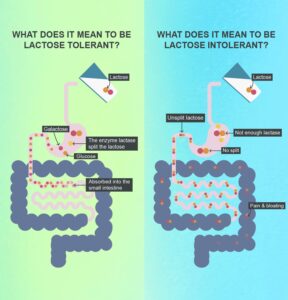
- Lactose, a disaccharide sugar, requires enzymatic breakdown by lactase into glucose and galactose for absorption. When lactase production is insufficient, undigested lactose passes into the colon, where bacterial fermentation produces gas and other byproducts, causing symptoms.
Types of Lactose Intolerance
1. Primary Lactose Intolerance
The most common form, this is genetically determined and involves a gradual decline in lactase production with age. It is prevalent in populations historically consuming less dairy.
2. Secondary Lactose Intolerance
This form arises from intestinal damage due to conditions like celiac disease, Crohn’s disease, or infections. Treating the underlying condition can often restore lactase activity.
3. Congenital Lactase Deficiency
A rare genetic disorder, congenital lactase deficiency results in no lactase production from birth, causing severe symptoms upon lactose exposure.
4. Developmental Lactose Intolerance
Typically seen in premature infants, this condition is temporary, resolving as the digestive system matures.
Symptoms of Lactose Intolerance
Common Symptoms
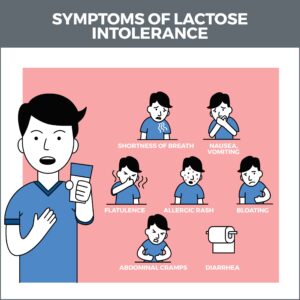
- Abdominal bloating
- Diarrhea
- Flatulence
- Abdominal pain and cramping
- Nausea and occasional vomiting
Onset and Variability
- Symptoms often emerge within 30 minutes to 2 hours of consuming lactose. Their severity depends on individual lactase activity and the amount of lactose ingested.
Differential Diagnosis
- Lactose intolerance symptoms overlap with other gastrointestinal disorders like irritable bowel syndrome (IBS) and inflammatory bowel disease (IBD). Accurate diagnosis ensures targeted management.
Diagnosis of Lactose Intolerance
1. Hydrogen Breath Test
- Measures hydrogen levels in the breath after lactose ingestion. Elevated levels indicate fermentation of undigested lactose in the colon.
2. Lactose Tolerance Test
- Assesses blood glucose levels before and after consuming lactose. A minimal glucose rise suggests impaired digestion.
3. Elimination Diet
- Involves removing lactose from the diet, monitoring symptom resolution, and gradually reintroducing lactose to confirm intolerance.
4. Stool Acidity Test
- Primarily used in infants, this test detects lactic acid in stool, a byproduct of undigested lactose fermentation.
Managing Lactose Intolerance
Dietary Modifications
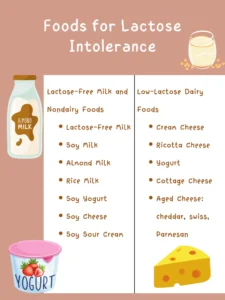
1. Lactose-Free Products
- Plant-based milk alternatives can include beverages made from plants like almond, soy, oat, rice, cashew and coconut milk.
If you choose a plant-based milk alternative, remember:
- Milk alternatives should not be given before your child is 12 months.
- Fortified soy beverages are the only milk alternative that help meet a child’s recommended dairy needs.
- Choose one that is unflavored and unsweetened. Your child does not need added sugars.
- Choose one fortified with vitamin D and calcium. Check labels because nutrient content can vary between brands.
- Talk with your child’s doctor or nurse about the milk alternative you are using. The vitamins and minerals in milk alternatives are different than in cow’s milk.
- Lactose-free dairy products: cheese, yogurt, and cream.
2. Controlled Consumption
- Small dairy portions consumed with meals may reduce symptoms by slowing digestion.
Lactase Enzyme Supplements
- Available as tablets or liquids, lactase supplements help digest lactose when taken with meals, minimizing symptoms.
Hidden Sources of Lactose
Lactose may be found in:
- Processed foods: soups, sauces, and baked goods.
- Pharmaceuticals: certain antacids and contraceptives.
- Nutritional supplements and protein powders.
Nutritional Considerations
1. Calcium and Vitamin D
To prevent deficiencies:
- Include fortified plant-based beverages, leafy greens, and enriched foods.
- Use vitamin D supplements and ensure adequate sun exposure.
2. Probiotics
- Probiotic-rich foods, such as dairy-free yogurts and fermented vegetables, support gut health and may improve lactose tolerance.
Impact of Lactose Intolerance
Nutritional Consequences
- Bone Health: Calcium and vitamin D deficiencies increase the risk of osteoporosis.
- Dietary Gaps: Limited dairy consumption can lead to deficits in essential micronutrients.
Psychosocial and Economic Impact
- Social Isolation: Dietary restrictions may limit participation in communal meals and cultural events.
- Financial Strain: The higher cost of lactose-free products imposes economic challenges.
- Healthcare Costs: Regular medical consultations and reliance on supplements contribute to expenses.
Lactose Intolerance Worldwide
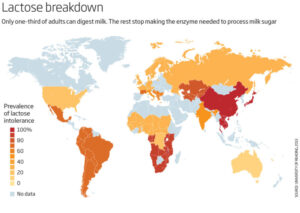
Global Prevalence
| Region | Prevalence (%) |
|---|---|
| Asia | 90–100 |
| Africa | 70–90 |
| Europe | 5–20 (North); 50–80 (South) |
| North America | 30–50 |
| Australia | 50–75 |
Cultural and Dietary Adaptations
- Regions with high prevalence often feature dairy-free staples. For example:
- Asia: Soy-based products.
- Africa: Cassava and millet.
- Skin Manifestations: There is some evidence linking lactose intolerance to skin manifestations, though the connection is indirect and varies among individuals. Lactose intolerance itself is primarily a gastrointestinal condition. However, secondary effects related to the consumption of lactose or associated nutritional deficiencies could potentially impact skin health. Here’s how:
- Eczema and Dairy Consumption:
While lactose intolerance and milk allergy are distinct conditions, some individuals report skin irritation, such as eczema or rashes, after consuming dairy. This might stem from overlapping sensitivities to dairy components rather than lactose itself.
-
- Nutritional Deficiencies:
Chronic avoidance of dairy without proper nutritional substitution can lead to deficiencies in calcium, vitamin D, and other nutrients essential for healthy skin. This might contribute to dryness, increased sensitivity, or delayed healing of skin lesions.
-
- Secondary Inflammation:
The gut-skin axis suggests that inflammation in the gastrointestinal tract, a possible outcome of unmanaged lactose intolerance, could exacerbate inflammatory skin conditions like acne or rosacea in some individuals.
Lactose intolerance can affect growth in children if it is not properly managed, but it does not directly stunt growth by itself. Here’s a clear explanation:
🍼 How Lactose Intolerance Can Affect Growth in Children
Potential Effects on Growth
1. Nutrient Deficiencies
If dairy is avoided without proper alternatives:
- Calcium and Vitamin D intake may drop
- These are essential for bone growth and development
➡️ Low calcium = weaker bones and potential growth problems
2. Inadequate Protein Intake
Milk is a good source of protein. If not replaced with other protein-rich foods:
- Muscle development and overall body growth may slow down
3. Reduced Appetite or Digestive Discomfort
Children may eat less due to:
- Stomach pain
- Bloating
- Diarrhea
➡️ Leading to lower calorie intake and slower weight/height gain
How to Prevent Growth Problems
To ensure proper growth, lactose-intolerant children should:
- Drink lactose-free milk or plant-based alternatives (e.g., almond, soy, oat milk with calcium and vitamin D)
- Eat non-dairy calcium sources (e.g., leafy greens, tofu, fortified cereals)
- Get enough sunlight for vitamin D
- Use lactase enzyme tablets (if approved by a doctor)
Lactose intolerance doesn’t directly stunt growth, but if the child doesn’t get enough calcium, vitamin D, or protein, growth can be affected. With a balanced, dairy-free diet, children with lactose intolerance can grow just as well as other kids.
Frequently Asked Questions
1. What is the primary cause of lactose intolerance?
- Lactase deficiency, whether genetically programmed or secondary to intestinal damage, is the main cause.
2. Can lactose intolerance be outgrown?
- Developmental lactose intolerance in infants often resolves, but primary lactose intolerance persists.
3. Is lactose intolerance the same as a milk allergy?
- No. A milk allergy involves an immune response to milk proteins, while lactose intolerance is a digestive disorder.
- See Post https://healthinfo.site/food-allergies-whats-new/
4. Can lactose intolerance be treated?
- While incurable, dietary strategies and lactase supplements effectively manage symptoms.
5. Are there risks associated with untreated lactose intolerance?
- Yes. Risks include nutritional deficiencies, poor bone health, and chronic gastrointestinal discomfort.
Conclusion
- Lactose intolerance represents a complex condition with profound dietary, social, and public health implications.
- Effective management integrates informed dietary modifications, lactase supplementation, and strategic nutritional planning.
- Continued public health initiatives to enhance awareness and accessibility to lactose-free options remain pivotal in addressing its broader challenges.
References
- National Institute of Diabetes and Digestive and Kidney Diseases (NIDDK). “Lactose Intolerance.” Retrieved from www.niddk.nih.gov
- World Health Organization (WHO). “Nutrition and Health.” Retrieved from www.who.int
- Harvard Health Publishing. “Lactose Intolerance: Diagnosis and Management.” Retrieved from www.health.harvard.edu
- Mayo Clinic. “Lactose Intolerance: Symptoms and Causes.” Retrieved from www.mayoclinic.org
- Academy of Nutrition and Dietetics. “Living Well with Lactose Intolerance.” Retrieved from www.eatright.org
- Lactase Persistence Database. “Global Lactase Deficiency.” Accessed via www.lactase.org
- https://www.cdc.gov/infant-toddler-nutrition/foods-and-drinks/cows-milk-and-milk-alternatives.html
That was very informative 💯 has cleared alot of confusions that i had in my mind thankyou!🥰
You are very welcome. Please feel free to ask any questions you may have in your mind.
Thank you for this article! It provides a concise and informative overview of lactose intolerance, highlighting its symptoms, management strategies, and societal implications. The emphasis on cultural sensitivity in addressing prevalence is particularly insightful.
Thank you for your input. Is there any particular topic you are interested in learning more about?
Can you be more specific about the content of your article? After reading it, I still have some doubts. Hope you can help me.
Thanks for sharing. I read many of your blog posts, cool, your blog is very good.
Thanks for sharing. I read many of your blog posts, cool, your blog is very good.
Can you be more specific about the content of your article? After reading it, I still have some doubts. Hope you can help me. https://www.binance.info/join?ref=P9L9FQKY
This is a crucial subject—keep producing such remarkable content! Someone shared their personal weight loss story, highlighting the difficulties they encountered before discovering the Diet-To-Go Meal Service. They noted that the pre-portioned meals saved them time and supported their commitment to their goals. The conversation is a reminder of how essential balance is to the weight loss journey. For those who may find it useful, here’s the link they provided.
Your enticle helped me a lot, is there any more related content? Thanks!
Great insight! Managing cloud servers often seems complex, but Cloudways takes the stress out of the equation. Their platform delivers powerful performance without the usual technical headaches. It’s an ideal solution for those who want scalable hosting without getting lost in server configurations. Definitely worth checking out for a smoother hosting journey. Keep up the excellent work! Explore more through the link.
Thanks for sharing. I read many of your blog posts, cool, your blog is very good.
Can you be more specific about the content of your article? After reading it, I still have some doubts. Hope you can help me.
Speed is everything in eCommerce – this article breaks down the best hosting for WooCommerce.
I don’t think the title of your article matches the content lol. Just kidding, mainly because I had some doubts after reading the article.
Your point of view caught my eye and was very interesting. Thanks. I have a question for you.
Thanks for sharing. I read many of your blog posts, cool, your blog is very good.
I don’t think the title of your article matches the content lol. Just kidding, mainly because I had some doubts after reading the article.
Thanks for sharing. I read many of your blog posts, cool, your blog is very good.
Your article helped me a lot, is there any more related content? Thanks!
Thanks for sharing. I read many of your blog posts, cool, your blog is very good.
Thank you for your sharing. I am worried that I lack creative ideas. It is your article that makes me full of hope. Thank you. But I have a question, can you help me?
Thank you for your sharing. I am worried that I lack creative ideas. It is your article that makes me full of hope. Thank you. But, I have a question, can you help me?
Can you be more specific about the content of your article? After reading it, I still have some doubts. Hope you can help me.
Can you be more specific about the content of your article? After reading it, I still have some doubts. Hope you can help me.
Your point of view caught my eye and was very interesting. Thanks. I have a question for you.
Your article helped me a lot, is there any more related content? Thanks!
Thank you for your sharing. I am worried that I lack creative ideas. It is your article that makes me full of hope. Thank you. But, I have a question, can you help me?
Can you be more specific about the content of your article? After reading it, I still have some doubts. Hope you can help me.
Your article helped me a lot, is there any more related content? Thanks!
Can you be more specific about the content of your article? After reading it, I still have some doubts. Hope you can help me.
I don’t think the title of your article matches the content lol. Just kidding, mainly because I had some doubts after reading the article.
Your point of view caught my eye and was very interesting. Thanks. I have a question for you.
Your article helped me a lot, is there any more related content? Thanks!
I don’t think the title of your article matches the content lol. Just kidding, mainly because I had some doubts after reading the article.
Your article helped me a lot, is there any more related content? Thanks!
I don’t think the title of your article matches the content lol. Just kidding, mainly because I had some doubts after reading the article.
Your point of view caught my eye and was very interesting. Thanks. I have a question for you.
Can you be more specific about the content of your article? After reading it, I still have some doubts. Hope you can help me.
Your point of view caught my eye and was very interesting. Thanks. I have a question for you.
Thanks for sharing. I read many of your blog posts, cool, your blog is very good.
Can you be more specific about the content of your article? After reading it, I still have some doubts. Hope you can help me.
Your article helped me a lot, is there any more related content? Thanks!
Your point of view caught my eye and was very interesting. Thanks. I have a question for you.
Thank you for your sharing. I am worried that I lack creative ideas. It is your article that makes me full of hope. Thank you. But, I have a question, can you help me?
Your article helped me a lot, is there any more related content? Thanks!
Thank you for your sharing. I am worried that I lack creative ideas. It is your article that makes me full of hope. Thank you. But, I have a question, can you help me?
Thanks for sharing. I read many of your blog posts, cool, your blog is very good.
Thanks for sharing. I read many of your blog posts, cool, your blog is very good.
I don’t think the title of your article matches the content lol. Just kidding, mainly because I had some doubts after reading the article.
Thanks for sharing. I read many of your blog posts, cool, your blog is very good.
Your article helped me a lot, is there any more related content? Thanks!
Thank you for your sharing. I am worried that I lack creative ideas. It is your article that makes me full of hope. Thank you. But, I have a question, can you help me?
Thanks for sharing. I read many of your blog posts, cool, your blog is very good.
Thank you for your sharing. I am worried that I lack creative ideas. It is your article that makes me full of hope. Thank you. But, I have a question, can you help me?
Thank you for your sharing. I am worried that I lack creative ideas. It is your article that makes me full of hope. Thank you. But, I have a question, can you help me?
Your article helped me a lot, is there any more related content? Thanks!
Can you be more specific about the content of your article? After reading it, I still have some doubts. Hope you can help me.
Thanks for sharing. I read many of your blog posts, cool, your blog is very good.
Your point of view caught my eye and was very interesting. Thanks. I have a question for you.
Your point of view caught my eye and was very interesting. Thanks. I have a question for you.
Thanks for sharing. I read many of your blog posts, cool, your blog is very good.
Thank you for your sharing. I am worried that I lack creative ideas. It is your article that makes me full of hope. Thank you. But, I have a question, can you help me?
Thanks for sharing. I read many of your blog posts, cool, your blog is very good.
Can you be more specific about the content of your article? After reading it, I still have some doubts. Hope you can help me.
Your article helped me a lot, is there any more related content? Thanks!
Your article helped me a lot, is there any more related content? Thanks!
Thank you for your sharing. I am worried that I lack creative ideas. It is your article that makes me full of hope. Thank you. But, I have a question, can you help me?
Your point of view caught my eye and was very interesting. Thanks. I have a question for you.
Thanks for sharing. I read many of your blog posts, cool, your blog is very good.